
How to Clean & Care for Your Wetsuit: The Complete Guide

Your wetsuit is your most-used piece of gear — salt, sand, UV, friction... it takes a beating every session. Proper care preserves its elasticity, thermal properties, and extends its lifespan significantly. Whether you surf, wing foil, kitesurf, or swim open water, the right habits are the same.
Whether you own a Yamamoto neoprene wetsuit or a standard entry-level suit, this guide applies. We start with the basics and cover the details most riders overlook.
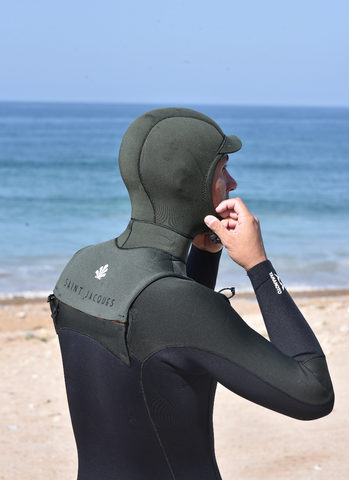
Rinsing your wetsuit after every session: the single most important habit
It's free, takes two minutes, and makes more difference than anything else over time. After every session, rinse your wetsuit with cold fresh water — inside AND outside. The inside is a breeding ground for bacteria (salt, sweat, sometimes urine): skipping it accelerates jersey degradation and creates persistent odours.
How to do it:
- Turn the wetsuit inside out and rinse the interior first
- Run cold water over each side for 2–3 minutes
- Even better: soak it for 15 minutes in a bucket of cold fresh water with a few drops of neoprene cleaner (like Piss Off) — every 3 to 4 sessions. This is the sweet spot between a quick rinse and a machine wash
- No hot water — it softens the seam glue
For transport, a waterproof wetsuit bag keeps your car boot clean and stops your suit dragging through sand between sessions.
Can you machine wash a wetsuit?
Yes — and despite what you often read, it's perfectly fine as long as you follow the rules strictly. Most wetsuits are damaged in the washing machine by people who don't follow them, not by the machine itself.
The non-negotiables:
- Temperature: 30°C maximum — above this, seam glue softens
- Delicate or hand-wash cycle only
- Zero spin — this does the most damage to neoprene and seams
- Zero fabric softener — it degrades neoprene elasticity
- Zip everything up before starting — a zip rattling around the drum breaks the stitching
- Remove the suit wet immediately from the drum and lay flat to dry
How often? Machine washing is a deep-clean, reserved for season changes — twice a year maximum. Between sessions, cold rinse and bucket soaking are enough.
What product to use in the machine? Nothing. No detergent, no neoprene cleaner, no softener in the drum. Cold water alone at 30°C is sufficient for machine washing. Neoprene cleaner (like Piss Off) is for bucket soaking between sessions — not for the machine.
And no, never use a tumble dryer. Ever. 🙂
How to dry your wetsuit properly
Drying is the most commonly rushed step. Drying a wetsuit badly means warping it, delaminating seams, and fading the jersey.
The rules:
- Never in direct sunlight — UV degrades the jersey fabric and seam glue within a few sessions
- Never on a hanger — the weight of the water pulls on the shoulders and warps the seams
- Flat or folded at the waist, in the shade, with airflow
- Dry inside out first, then flip to finish the outside
If you often dry on a van roof or at the car park after a session, a roof-mounted drying bar is a great solution — the suit dries in the shade on the drive home.

How to put on and take off your wetsuit without damaging it
Micro-tears at the seams often come from forcing the suit on or ripping it off. Neoprene is stretchy, but it's not indestructible.
- Never pull on the seams at the shoulders, knees, or ankles
- Roll the neoprene gradually upward when putting it on
- Keep your nails short or use thin gloves — a fingernail cut in neoprene travels fast
- Don't drag it through sand (seam abrasion)
- A surf poncho lets you change cleanly in the car park without putting the suit on the ground
For neoprene tops, same principle: slide the sleeves on without forcing the underarm seams, which take the most stress.
Storing your wetsuit between sessions
Whether between back-to-back sessions or for long off-season storage, how you store your suit matters.
- Clean and dry before storing — a damp suit stored away grows mould and odours within days
- Flat or folded at the waist, never bunched up, never with hard folds at the knees (these crack the neoprene)
- Away from direct light and heat (not in a hot car boot in summer)
- For transport between spots, a waterproof wetsuit bag protects the interior and keeps the suit cool
The 5 mistakes that kill a wetsuit
- Leaving it in direct sun to dry — UV bleaches the jersey and weakens the seam glue within weeks
- Leaving it damp in the boot for days — guaranteed fermentation, persistent odours, jersey degradation starts from the inside
- Hanging it on a hanger — the water weight pulls the shoulders, seams gradually fail
- Using it in a chlorinated pool — chlorine permanently attacks neoprene elasticity
- Only rinsing the outside — the inside accumulates salt, bacteria, and urine; degradation starts from within
💡 Watch Stan's tip on YouTube:
Useful accessories for wetsuit care
Nothing is strictly essential, but these few products make a real difference over the lifespan of your suit:
- Neoprene cleaner (Piss Off) — for bucket soaking between sessions
- Waterproof wetsuit bag — protects your car and suit, stops sand getting into the seams. Our bucket bag model doubles as a rinse bucket on the spot
- Changing poncho — to avoid putting the suit down in sand. Our 100% cotton ponchos do exactly that
- Roof drying bar — if you regularly dry on the road
If your wetsuit has run its course, explore our full wetsuit range — Yamamoto and Limestone Superstretch — for all disciplines and all water temperatures.
Got a neoprene neck warmer or other neoprene accessories? Same rules apply: cold fresh water rinse after every session, dry in the shade.
Frequently asked questions about wetsuit care
Can you machine wash a wetsuit?
Yes, at each season change. Delicate cycle, 30°C max, no spin, no detergent, no softener. Zip everything up before the cycle. Between sessions, cold rinse and bucket soaking every 3–4 sessions is enough.
Can you dry a wetsuit in the sun?
No. UV rays degrade the jersey and seam glue. Always dry in the shade, flat or folded at the waist. Never on a hanger, never in a tumble dryer.
What product should you use to care for a wetsuit?
A specialist neoprene cleaner (like Piss Off) for bucket soaking every 3–4 sessions. For daily rinses, cold fresh water is enough. In the machine, nothing — water alone at 30°C. Avoid regular detergents, bleach, and fabric softeners.
How often should you wash a wetsuit?
Cold rinse after every session. Neoprene cleaner bucket soak every 3–4 sessions. Machine wash only at each season change.
How should you store a wetsuit?
Clean and dry, flat or folded at the waist, away from direct light. Avoid prolonged folds at the knees and shoulders, which crack the neoprene over time.
How do you get rid of wetsuit odours?
Rinse the inside with cold fresh water after every session without fail. For a deep treatment, soak for 15 minutes in a bucket of cold water with a few drops of neoprene cleaner. The bucket bag is handy for rinsing directly at the water's edge.
💡 Time for a new wetsuit?
Explore our Yamamoto and Limestone Superstretch wetsuits, built to last.
Any questions? Contact our team.
2 Comments
Merci, le shorty est confortable et de qualité exceptionnelle.
Merci pour les conseils .bien reçu la commande.
A bientôt