
Mid-Season Wetsuit: Which Neoprene Should You Choose?
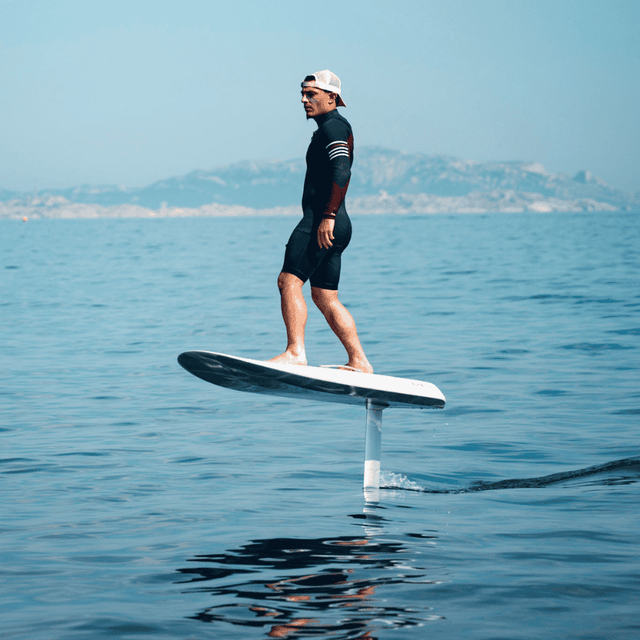
Mid-season is the trickiest time to choose a neoprene wetsuit. Not really warm, not really cold: Atlantic water swings between 13°C and 20°C in spring and autumn — two quite different periods. This guide helps you pick the right thickness and cut for your surf, wingfoil, kitesurf, SUP or longe-côte sessions, based on the actual water temperature rather than how the air feels.
What neoprene thickness for what water temperature?
Thickness is chosen based on water temperature first — not the weather. Water at 17°C under a sunny September sky is still 17°C below the surface.
| Water temperature | Recommended thickness | Wetsuit type |
|---|---|---|
| Above 22°C | Lycra / 1mm | Sleeveless shorty, lycra |
| 18–22°C | 2/2mm | Short or long sleeve shorty |
| 14–18°C | 3/2mm | Full suit or long sleeve shorty |
| 10–14°C | 4/3mm | Full suit + accessories (boots, neck warmer) |
| Below 10°C | 5/4mm or more | Winter full suit + hood + gloves + boots |
Spring or autumn: two different mid-seasons
The term "mid-season" actually covers two opposite realities.
In spring, the water warms up slowly: from 12°C to 18°C between March and June on the Atlantic coast. You're often ahead of the season — a 3/2mm is enough once the water passes 14°C, but a 4/3mm is needed in early spring on the north Atlantic and Normandy coasts. It's also the right time to inspect your wetsuit after winter: seams, zip, stretch.
In autumn, the water is still warm in September (20°C+ on the south Atlantic coast, 24°C in the Mediterranean), but it cools fast: by October–November, it drops to 14–17°C on the Atlantic side, 16–19°C in the Mediterranean. A 3/2mm holds up from mid-September to mid-October on the south Atlantic coast; you'll need to move to a 4/3mm from October on the north Atlantic. Don't wait until you're cold to plan ahead.
By sport: adapting your wetsuit choice
Surf and longboard
Lying down on the board (paddling) limits physical exertion and makes you more sensitive to the cold. A simple rule: go one thickness above what you'd choose for the air temperature. For 15°C water, a 3/2mm is the minimum — a 4/3mm is more comfortable.
Wingfoil and kitesurf
Wind sports cool you down twice as fast: the apparent wind creates a significant wind-chill effect above the water, even in fine weather. For wingfoil, systematically go up one thickness compared to your usual surf conditions. Water at 17°C? Choose a 4/3mm rather than a 3/2mm. Our neoprene advice for wingfoil covers the complementary gear we recommend.
Stand Up Paddle (SUP)
Standing and active, SUP generates more heat than surfing. You can stay in a 3/2mm down to 12–13°C if you're paddling actively. For long sessions or SUP foil (less continuous movement), go back to the water-temperature table above.
Longe-côte
Swimming generates a lot of muscular heat, but long outings in cold water gradually wear down your thermal resistance. In autumn (water at 15–18°C), a 3/2mm full suit is the recommended minimum. For winter outings, go for a 4/3mm with accessories (hood, boots). A full suit is preferable to a shorty to limit shoulder chafing while swimming.
The long sleeve shorty
The long sleeve shorty is a popular choice among surfers. Easy to put on thanks to its short legs, it offers excellent thermal protection with its long sleeves. The men's Clovis model is fitted with a chest zip for excellent watertightness, with glued and blind-stitched seams inside — 3mm on the body, 2mm on the arms.
This type of shorty is of course also available in a women's version. Jade is a best seller with its front zip and high waistband for a unique feminine look.

The short sleeve full suit
For wind sports, the short sleeve full suit is ideal. It combines long legs with short sleeves, with knee pads to make transitions on the board easier, like in wing foil. In 3/2mm, it's perfect for cool mornings, windy summer days, and mid-seasons depending on where you're based.
The long john

The long john, a sleeveless full suit with a retro style, is very popular with longboarders, stand-up paddlers and old-school surfers. Offering great ease of movement for paddling and excellent warmth, this wetsuit covers almost the entire body. Redesigned with a front zip and high collar, it's easy to put on and offers excellent watertightness. Made from 3mm limestone-based neoprene with glued and blind-stitched seams — a true French classic!
The short sleeve shorty

The short sleeve shorty is a versatile option for warmer mid-seasons (water at 18–22°C), offering great freedom of movement ideal for surfing, kiting or paddling. Saint Jacques offers a back zip model with flat lock seams to minimize chafing. In 2/2mm, it provides sufficient thermal protection while guaranteeing great flexibility — it's also the most accessible piece in the range.
For women, the Victoire shorty offers a unique look directly inspired by 1920s swimwear, elegant and technical.

Mid-season accessories
Once water temperature drops below 15°C, the wetsuit alone isn't enough. Extremities — hands, feet, neck — lose heat first and set the tone for overall comfort in cold water.
- Neoprene neck warmer: protects the gap between the wetsuit and the neck, very effective for wind sports. Our 2mm Limestone Superstretch neck warmer slips under a full suit or neoprene jacket.
- Neoprene boots: essential from 14°C for surfing and longe-côte
- Neoprene gloves: from 10–12°C, particularly for wind sports
- Hood: for winter conditions or wind sports in cold weather
Find all our neoprene accessories: neck warmers, headbands, dry bags.
Frequently asked questions
What thickness for a mid-season wetsuit?
As a general rule: 3/2mm for water between 14 and 18°C, 4/3mm for water between 10 and 14°C. Wind sports (wingfoil, kitesurf) often call for extra thickness because of the apparent wind.
What wetsuit for wingfoil in autumn?
Wingfoil combines cooling from the water with a wind-chill effect. From October on the north Atlantic coast, a 4/3mm full suit with a neck warmer is recommended for sessions over an hour. In the Mediterranean, a 3/2mm is often enough until November.
Can I wear my summer shorty into autumn?
A 2mm shorty works well down to around 18°C water. Below that, the cold sets in from the first hour of your session. For Atlantic autumn conditions (15–17°C in October), a 3/2mm or 4/3mm full suit is needed.
Full suit or shorty for mid-season?
A shorty works for water between 18 and 22°C. Below 18°C, a full suit protects your limbs better and significantly reduces heat loss. A full suit cut is also more versatile between spring and autumn.
Choosing the right neoprene wetsuit for mid-season means making the most of your surf, windsurf, kite and other water sports sessions. Discover our full range of neoprene wetsuits — shorties, full suits and long johns — for every practice and every temperature.

0 Comments
There are no comments for this article. Be the first one to leave a message!